|
|
| Cold Air Return for Finished Basement |
| Here on this page I would like to introduce one of the cases of the cold air return for the finished basement:
1. List of materials needed for the project:
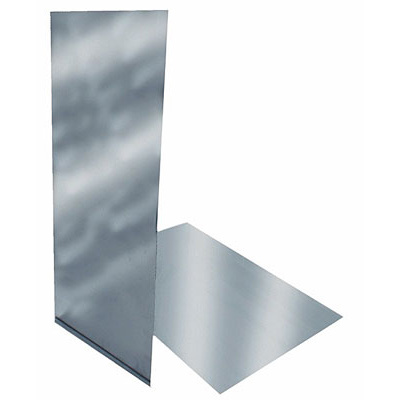 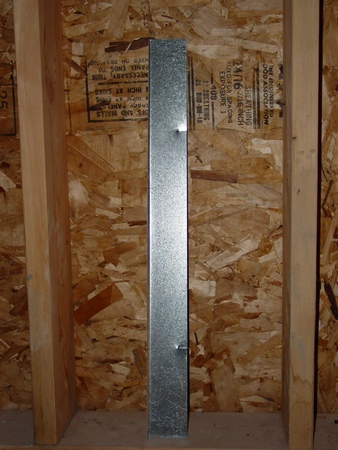 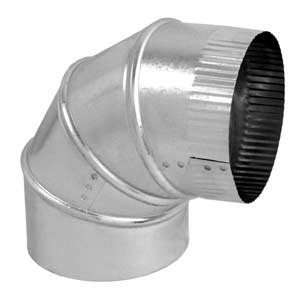 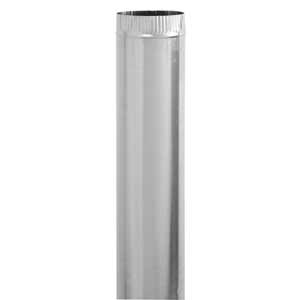
Single sheeting 14” x 6” Frame 6” Round Elbow 6” Pipe
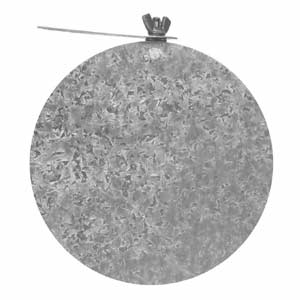 Sheeting Nails Sheeting Nails
Zip Screws
6” Damper
2. List of the tools needed for the project:
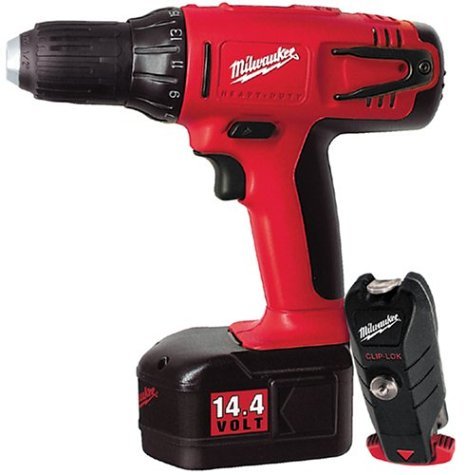 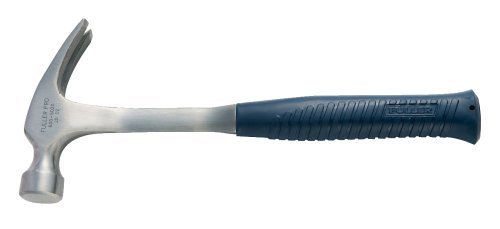 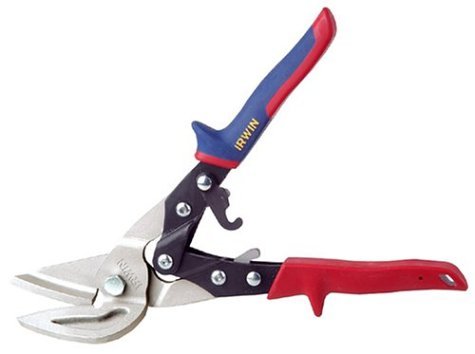 
Cordless drill Hammer Red aviation snips Replaceable-blade Snips
   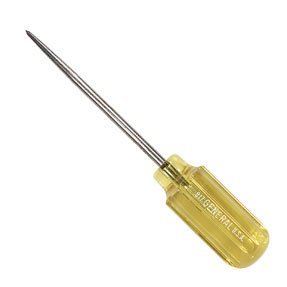
Tape Measure Flat Screwdriver Magic Marker Scratch awl
When people are finishing their basements off, they are usually creating a mechanical room. This room is serving not only the purpose of separating noisy heating equipment such as furnace and water heater, but also serves as a storage room. From the ductwork installation point of view, it makes easier to install a cold air return.
In order to better organize an explanation of the execution of this project I would like to divide it in several steps:
Step # 1 – 14” x 6” Frame installation:
As you see in P. 1 “14” x 6” Frame” is installed on the face side of the wall 8” above the floor. A frame in the picture is made on field from 2 ½” x ½” x 26” sheet metal angle. If you have this kind of material you have to do the following:
P. 1
- Take a sheet metal angle in the left hand folded side up with the tape measure hooked up to the right end of it and by using red aviation snips make a short cut at the 6” mark on the wide side
- ........
This is a parent page. If you would like to read more you can buy an access to the secondary page for only $3.00. You can pay right here on this page by using a "Buy Now" button below.
Four more topics were added to the paid page recently at no additional cost, like:
- How to Measure and Cut Pipe
- How to Put Pipe Together
- How to Crimp Pipe
- Installing Return Air Duct Video Clip
Installation on the paid page may not exactly describe your upcoming project. However, it will give you an important example of how this type of installation should be done.
In order to gain an access to the secondary page you have to pay the access fee of only $3.00. Just click on the “Buy Now” button below. Once you pay, you will gain an instant access to the page!
Instant Access
Register on the site first, otherwise after you have purchased a paid page; PayPal is going to bring you back to my website. In order to see the paid page you have to click on the “Register” button, fill out the form, choose your own Username and Password and click on the “Register” button at the bottom of the form – congratulation, you are now on the page you have paid for!
Important
After you have purchased any Paid page or Download page and PayPal brought you back to my website, the first thing that you should do is to save that page to your Favorites. Then if something goes wrong you always can come back to re-register yourself on my website again.
|
| Cold Air Return for Finished Basement |
|
www.managemylife.com
Are Cold Air Returns Needed in a Basement?
I'm remodeling my basement. It has 4 heat vents and no cold air returns. The basement is always cold. Do I need to add cold air returns to get the warm air to circulate? If so , can they be cut right into the main cold air return in the furnace? The furnace room has louvered doors so there is circulation to the furnace.
Expert Alina F. April 21, 2011
I understand that you want to learn about the cold air returns in a basement. I have found a great website that gives your all the information you need. I attached the link below if you are interested in viewing. I hope this is helpful!
http://www.ductworkinstallation.com/PAQ/ColdAirReturninBa...
|
|
Basement Cold Air Return in Pictures
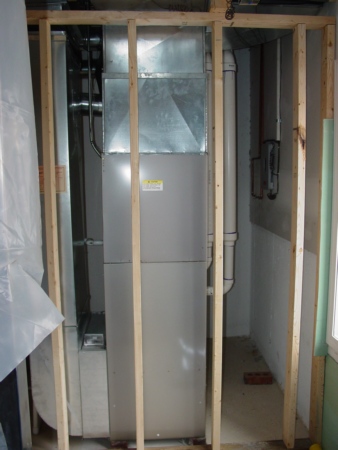
On this page, you can see pictures of all materials and tools necessary for installation. Pictures, which represent installation, are set in a sequence in which the installation was executed. There are 15 pictures of tools and materials and 12 pictures of actual installation.
As you can see in the picture on the right the original builder put a window too close to the furnaces! He probably thought that all this aria - from the furnaces, down to the window's end would be just the entire storage-mechanical room, but a homeowner had a different opinion. However, because of that I didn't have enough room for a cold air return to the left, so I ran it to the right.
In addition I've included some brief explanations, which made this page as twice as valuable!
Installation on the paid pages might not exactly describe your upcoming project. However, it will give you an important example on how this type of installation should be done. In addition, it will open the gates for as many questions as necessary to make sure that the job is done right.
In order to gain an access to the Basement Cold Air Return Installation in Pictures page you have to pay an access fee of $1.86. Just click on the “Buy Now” button below. Once you pay, you will gain an instant access to the page!
Instant Access
After you have purchased a paid page; PayPal
is going to bring you back to my website. In order to see the paid page you have to click on the “Register” button, fill out the form, choose your own Username and Password and click on the “Register” button at the bottom of the form – congratulation, you are now on the page you have paid for!
Important
After you have purchased any Paid page or Download page and PayPal brought you back to my website, the first thing that you should do is to save that page to your Favorites. Then if something goes wrong you always can come back to re-register yourself on my website again.
|
|
Return from Exterior Wall in Basement (Installation in Pictures)
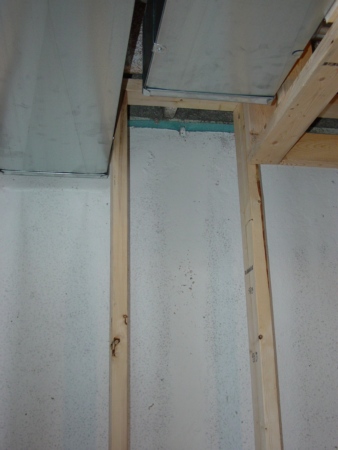 Sometimes you don't have a choice, but must use an exterior wall for a cold air return in your finished basement. This type of installation requires a different approach, which I have employed for this project. Sometimes you don't have a choice, but must use an exterior wall for a cold air return in your finished basement. This type of installation requires a different approach, which I have employed for this project.
On the page, you can see 11 pictures of the tools and materials and 15 pictures of installation that represent it in the step-by-step manner.
In order to gain an access to the Return from Exterior Wall in Basement (Installation in Pictures) page you have to pay an access fee of $1.34. Just click on the “Buy Now” button below. Once you pay, you will gain an instant access to the page!
Instant Access:
After you have purchased a paid page; PayPal is going to bring you back to my website. In order to see the paid page you have to click on the “Register” button, fill out the form, choose your own Username and Password and click on the “Register” button at the bottom of the form – congratulation, you are now on the page you have paid for!
Important: After you have purchased any Paid page or Download page and PayPal brought you back to my website, the first thing that you should do is to save that page to your Favorites. Then if something goes wrong you always can come back to re-register yourself on my website again.
|
|
Finished Basement Edition is an e-book designed just for you! In this book you can find answers to your most frequently asked questions about ductwork installation in basement and more.
For more information please visit “Finished Basement Edition” page.
|
|
Some of these questions and searches were answered on the paid pages above, and to some of them you can get answers below:
Add cold air return to basement
Adding cold air return in basement
Adding heat air to a basement do I want returns? – Yes.
Basement cold air return placement
Basement return damper
Basements should not have air conditioning register vent – No, it should.
Best location of cold air return in finished basement
Can a cold air return in the basement be in the ceiling? – No.
Can I add on to cold air returns for basement? – Yes you can.
Cold air return basement walls
Cold air return done right
Cold air return in basement ceiling joist how to install – Learn how to do it in my Ductwork Installation Guide book.
Cold air returns in basement necessary
Cut into flat cold air return duct
Damper on basement return
Determine cold air returns in finished basement
Do I need a cold air return for basement?
Do I need a cold air return for each room? – Yes.
Forced air in basement is it better in the wall or ceiling?
Furnace return air location in basement
How do you put in return ducts in basement?
How many cold air returns in a basement – One in every bedroom and two if you have big family room.
How many return air vents are needed in a basement?
How to build a cold air return?
How to extend cold air return in basement?
How to finish a basements duct work?
How to frame for cold air return in basement?
How to install a cold air return in basement?
How to install hvac in basement pictures?
How to put a cold air return in a wall?
How to run a cold air return?
Installing a cold air return in basement
Installing cold air return without duct work – Yes, it’s partially possible to do. Just put two transfer grills on the wall.
Installing cold air returns in basements
Location of air returns in basement
Louvered door finished basement for return air – Well you can do it as well, but you need a cod air return in your finished basement anyway.
Placement of cold air return in basement
Should the basement have return air ducts?
Where to place cold air returns in a basement?
Where to put a cold air return in furnace room?
Why do you need a cold air return in recreation room? – You need it in every conditioned room except bathroom, laundry room and kitchen.
Why vent in cold air return in basement near furnace?
Will adding a cold air return in the basement warm it up? – Yes it will.
Will city inspector allow two back to back rooms to feed of same stud cavity for return air? – Probably because these rooms have the same privacy level. For instance a bedroom and walk-in closet.
|
|
|
A website "ductworkinstallation. com" focus on providing information and services related to the installation of ductwork systems , which are the tubes used to distribute heated or cooled air throughout a building as part of an HVAC system; essentially, it would be a platform for individuals or companies specializing in designing and installing ductwork for homes and commercial properties, offering details on the process, and potential contractors to contact for such services.
Key points about ductwork installation websites:
Services offered:
New ductwork installation, ductwork repair, duct cleaning, duct sealing, airflow balancing.
Target audience:
Homeowners looking to install a new HVAC system, individuals experiencing issues with their existing ductwork, commercial property owners needing ductwork for large buildings.
Information provided:
Explanations on different types of duct materials, design considerations for optimal airflow, potential benefits of proper ductwork installation.
|
|